

Technology makes production safer.

Damage of Elevator Traction Wire Rope Threatens Safe Operation of Elevator
Release time:
2021-07-20
Today, Luoyang Baikte Science and Technology Development Co., Ltd. Xiaobian introduced the relevant knowledge of elevator traction wire rope damage threatening the safe operation of elevators! As we all know, the elevator as a high-rise building to carry passengers, the main means of transport, is now widely used. As the lifting speed of the elevator is getting faster and faster, the height is getting higher and higher, and the requirements for the quality of the elevator wire rope are getting higher and higher. During the operation of the elevator, the wire rope often has fatigue, broken wire, broken strands, rust and other phenomena, which directly threatens the safe operation of the elevator.

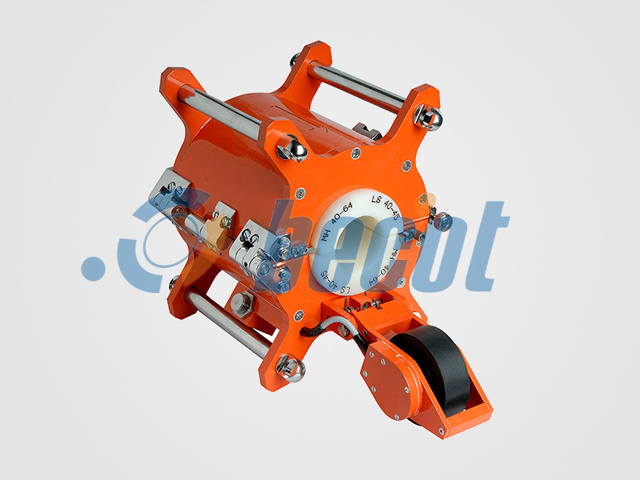
Today, Luoyang Baikte Science and Technology Development Co., Ltd. Xiaobian introduced the relevant knowledge of elevator traction wire rope damage threatening the safe operation of elevators! As we all know, the elevator as a high-rise building to carry passengers, the main means of transport, is now widely used. As the lifting speed of the elevator is getting faster and faster, the height is getting higher and higher, and the requirements for the quality of the elevator wire rope are getting higher and higher. During the operation of the elevator, the wire rope often has fatigue, broken wire, broken strands, rust and other phenomena, which directly threatens the safe operation of the elevator.
1. The production process
In the production process of wire rope, the quality of twisting is the key. For example, the uniformity of the diameter of the rope core directly affects the stability of the diameter of the wire rope. Once the diameter of the rope core has a large deviation, it will lead to a large tolerance of the diameter of the local wire rope. During the operation of the elevator, the position of the rope diameter is easy to be connected with the rope. Irregular wear is formed between the wheels, and early fatigue wear and wire breakage and strand breakage occur. If the rope re-inspection procedure can be added during the factory inspection, the quality of the wire rope will be greatly improved.
2. Transportation and storage
A, in the process of transportation, the use of forklift loading and unloading, if the shovel blade to the wire rope, it will cause local damage and deformation of the wire rope, the mechanical properties of the damaged parts will be reduced. If the damaged wire rope is installed on the elevator, it will be worn and broken after short-term operation.
B, wire rope in the storage period, if the storage is not good, once the rain soaked or stained with cement, mortar and other debris, will make the wire rope corrosion, corrosion part of the surface of the steel wire mechanical properties greatly reduced. After such a wire rope is installed on the elevator, early fatigue wire breakage and strand breakage will occur, shortening the service life of the wire rope.
3. On-site installation
a. For example, for an elevator with a rope winding ratio of 2:1, the traction wire rope needs to bypass multiple rope wheels such as the car top wheel, traction wheel, guide wheel, counterweight wheel, etc. If the operation is improper in the rope laying process, local damage (such as twisting, knotting, scraping by other sharp objects, etc.) will occur to the wire rope, and the strength of the damaged part will be reduced, resulting in an increase in wire rope breaking speed and a decrease in safety coefficient, it is easy to cause brittle fracture of steel wire rope. At the same time, the roundness of the wire rope section deteriorates, which is easy to cause abnormal wear of the traction sheave rope groove.
B. When installing on-site welding components, if the welding slag splashes on the wire rope, it will cause the wire on the surface of the wire rope to be burned. After the burned wire rope is installed on the elevator, it will also cause wire breakage and strand breakage of the wire rope.
C, if there is a foreign body in the rope wheel groove (left when the elevator is installed), a certain point of the wire rope in high-speed operation is pressed by the foreign body, the root or multiple steel wires of the point may be damaged, and the torsion performance of the steel wire at the damaged part is affected. With the increase of the number of elevator operation, the damage of the steel wire passing by the foreign body will be more serious, which will make the steel wire rope fatigue, indentation, depression and other damage, and reduce the working strength of the steel wire rope.
d. The difference in position between the traction sheave and the guide (reverse rope) sheave is also a reason. If the parallelism and verticality of the traction sheave and the guide (reverse rope) sheave in the machine room exceed the standard 1mm and 0.5mm, side wear will occur between the wire rope and the wheel groove. This not only damages the wheel groove, but also causes wear, wire breakage and strand breakage of the wire rope.
e. "2/3 theory" is also an important reason. Most of the early broken wires and strands of the traction rope on site appear on the counterweight side wire rope at 2/3 of the elevator lifting height (people stand on the top of the car to check). This position is exactly the position where the traction rope is placed below and bent through the counterweight wheel when the elevator is installed. If the upper and lower coordination is not good, the traction wire rope is easy to kink in the place, resulting in local damage and deformation of the wire rope. The mechanical properties of the steel wire on the surface of the steel wire rope after deformation are greatly lost. After operation, it is easy to break the wire, break the strand, kink and deformation in a short time.
4. Tension problem
After the installation of the elevator is completed, the tension between the traction ropes is required to be adjusted to a mutual difference of not more than 5%, but for the elevator with a traction ratio of 2:1, it is difficult to meet this requirement, and it is easy to make the force between the ropes uneven. In this case, the rope with high tension is prone to fatigue and broken wires, while the wire rope with low tension is prone to slip, roll and vibrate in the rope groove, resulting in eccentric wear between the rope and the wheel, resulting in wear and broken wires.
5. Maintenance
After the elevator is used for a certain time, the traction wire rope will be short of oil, and the surface of the wire rope should be relubricated. If the wire rope is short of oil, it is easy to rust the wire rope and produce dry friction with the rope sheave groove, thus seriously wearing the rope box wire rope. At the same time, the tension of the wire rope must be adjusted frequently during the maintenance process to ensure that the tension between the ropes is uniform to help improve the service life of the wire rope.
The safety and maintenance of elevator wire rope is not limited to manual inspection and maintenance based on experience, but should adopt advanced testing equipment to provide more scientific and high protection for elevator safety!
The safety of the elevator is closely related to you and me who take the elevator every day, and it is very important to ensure the safety of the elevator wire rope. The business of Luoyang Baikte Technology Development Co., Ltd. involves the research and development, production, sales and service of high-performance friction liners, wire ropes, rope grease, CNC rope groove maintenance equipment, wire rope nondestructive testing equipment and other products. Market services cover mines, ports, offshore equipment, oil exploration, bridges and cables, water conservancy and hydropower, special testing, astronomy, military research and other fields. We look forward to working with you!
recommend News
Service hotline
China (Henan) Pilot Free Trade Zone Luoyang Area High-tech 288 Heluo Road, Development Zone
Wechat Number
SAF Coolest v1.3.1.1 设置面板 GAGSD-ZGYF-JXSVE-SAS
无数据提示
Sorry, the current column is being updated, please look forward to it!
You can view other columns or returnHome Page