

Technology makes production safer.

Non-destructive testing method of steel wire rope
Release time:
2021-05-12
There are many kinds of nondestructive testing methods for steel wire rope, such as ultrasonic testing method, ray testing method, acoustic emission testing method, eddy current testing method, electromagnetic testing method, mechanical testing method, acoustic testing method, current testing method, optical testing method, vibration testing method, etc. Until recent years, mainly electromagnetic testing method, the rest of the non-destructive testing technology is still limited to the laboratory research stage.

Non-destructive testing of steel wire ropeThere are many kinds of methods, such as ultrasonic detection method, ray detection method, acoustic emission detection method, eddy current detection method, electromagnetic detection method, mechanical detection method, acoustic detection method, current detection method, optical detection method, vibration detection method and so on. Until recent years, mainly electromagnetic testing method, the rest of the non-destructive testing technology is still limited to the laboratory research stage.
Wire rope defects fall into two broad categories: local damage LF type and metal cross-sectional area loss LMA type. Local damage LF type mainly refers to the discontinuity in the wire rope, such as broken wire, steel wire corrosion pit, deep steel wire wear or other wire rope local physical state degradation. Metal cross-sectional area loss LMA type refers to the damage that causes the total reduction of the metal cross-sectional area of the wire rope cross-section, which is detected by the instrument and measured by comparing the detection point with the reference point on the wire rope representing the larger metal cross-sectional area.
In view of the local damage LF type defect, the principle of magnetic flux leakage testing method is: through the wire rope broken wire leakage of the magnetic field for wire rope nondestructive testing, detection of wire rope defects. In view of the LMA type defect of metal cross-sectional area loss, the principle of the main magnetic detection method is to detect the change of the metal cross-sectional area of the wire rope by measuring the magnetic flux through the wire rope.
According to the different working principle of electromagnetic detection method, the magnetization mode is divided into AC magnetization, DC magnetization and permanent magnet magnetization. In the magnetic detection method, permanent magnetic magnetization is used.
The working principle of permanent magnet magnetization detection of LMA type defects is: magnetize a section of steel wire rope (measured area) in the axial direction through the sensor head (magnetic circuit) to magnetize it to saturation; the magnetic induction intensity is constant, and the magnetic flux in the cross section of the steel wire rope is proportional to its area. The axial main magnetic flux is measured by induction coil, Hall element or other devices that can effectively measure the change of magnetic field or stable magnetic field, so as to quantitatively detect the cross-section loss.
The working principle of permanent magnet magnetization to detect LF-type defects is: when the magnetic field passes through discontinuities in the wire rope (such as broken wires, rust, local shape abnormalities, etc.), it will change to form magnetic flux leakage; through Hall element sensors, induction coils or Other appropriate devices detect electrical signals, and judge the local loss of the wire rope by recording the output electrical signals.
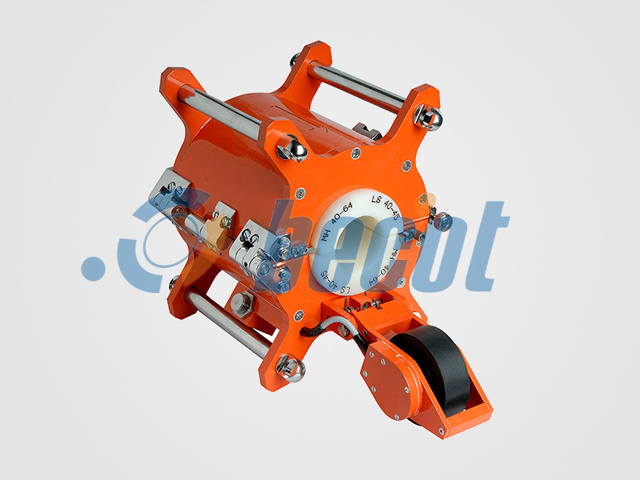
At present, the market mainly uses permanent magnet magnetization excitation, and Hall element sensorWire rope nondestructive detectorNon-destructive testing of wire ropes.
recommend News
Service hotline
China (Henan) Pilot Free Trade Zone Luoyang Area High-tech 288 Heluo Road, Development Zone
Wechat Number
SAF Coolest v1.3.1.1 设置面板 GAGSD-ZGYF-JXSVE-SAS
无数据提示
Sorry, the current column is being updated, please look forward to it!
You can view other columns or returnHome Page